
South Africa has one of Africa’s most developed technology ecosystems, but the next phase of its digital economy will be defined by more than startups and venture capital.
Artificial intelligence, cloud computing, fintech, cybersecurity, digital payments and data infrastructure are changing how South African businesses operate. At the same time, established companies are increasingly being forced to rethink how technology fits into their operations.
The opportunity is significant. But so are the challenges.
From startups to broader digital adoption
South Africa has spent years building a technology ecosystem around financial services, telecommunications, software and digital commerce.
The next opportunity is broader adoption.
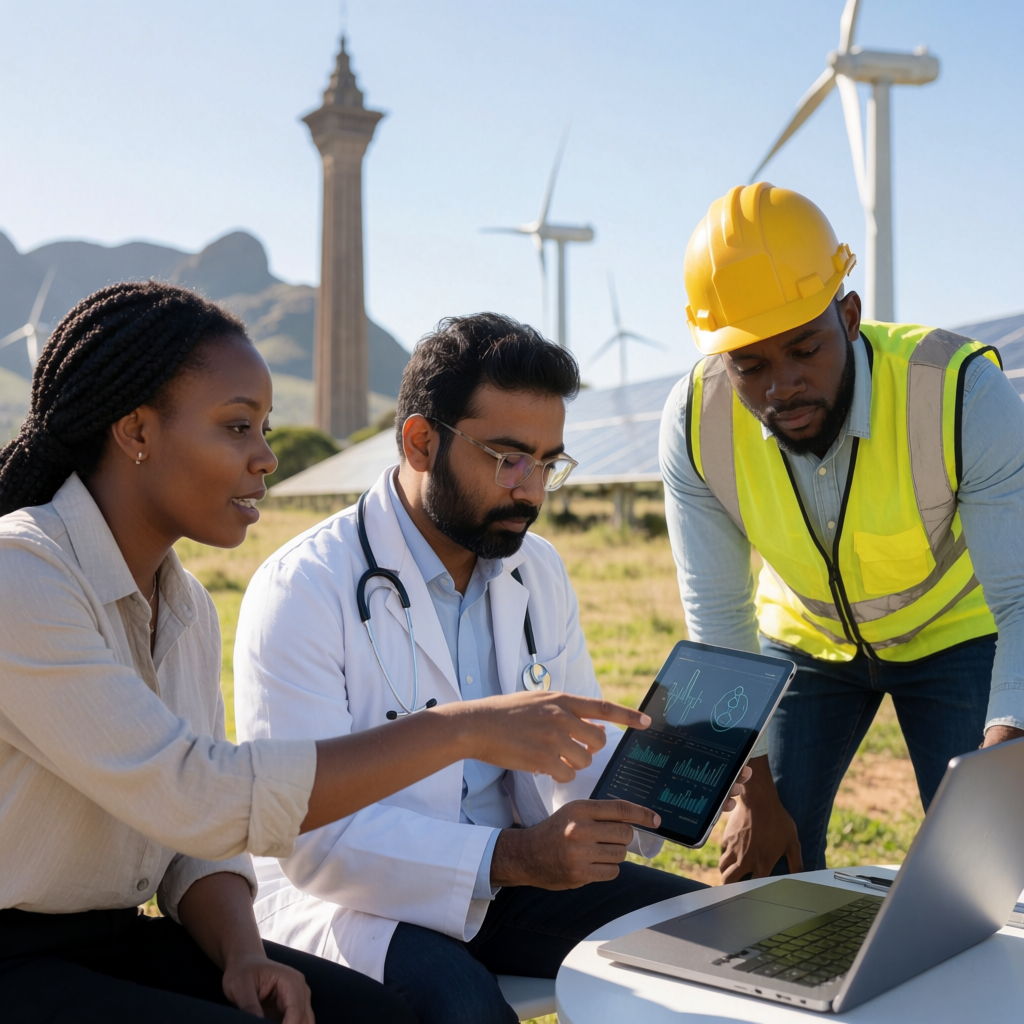
Technology is no longer something that belongs only to startups or large corporations. Smaller businesses are increasingly using digital payments, cloud software, online marketing, automation and AI tools to compete with larger companies.
That shift could become particularly important for South Africa’s small and medium-sized businesses.
A small company that can automate administrative work, analyse customer behaviour or use AI to produce marketing material can potentially operate with a much smaller team while serving more customers.
The advantage is not necessarily replacing people.
It is allowing people to accomplish more.
AI is changing the equation
Artificial intelligence is likely to accelerate this transformation.
South African companies are already experimenting with AI across customer service, financial services, software development, marketing, research and internal operations.
But the biggest opportunity may be among businesses that have traditionally struggled to access sophisticated technology.
AI can lower the cost of tasks that previously required specialised skills or larger teams.
A small accounting firm, retailer, logistics company or professional services business can now access tools that would have been expensive or difficult to build internally only a few years ago.
This could create a new generation of technology-enabled African businesses.
Infrastructure remains a constraint
Technology adoption, however, depends on infrastructure.
Reliable electricity, affordable connectivity, data centres, cloud computing and secure digital networks remain fundamental to the digital economy.
South Africa has significant advantages in this area compared with many African markets, including an established telecommunications sector and growing data-centre capacity.
But infrastructure must continue to expand as digital demand increases.
The companies that build and operate this infrastructure could become just as important to Africa’s technology future as the companies developing applications.
The opportunity beyond Johannesburg and Cape Town
South Africa’s technology economy also has an opportunity to become more geographically diverse.
Johannesburg and Cape Town remain major technology and business centres, but digital tools make it increasingly possible for entrepreneurs and companies outside the traditional hubs to participate in the technology economy.
That matters because a stronger technology sector should not be measured only by the number of startups created in major cities.
It should also be measured by how effectively technology allows businesses and workers across the country to participate in the wider economy.
South Africa can play a larger African role
South Africa’s biggest opportunity may ultimately extend beyond its own borders.
Companies that successfully develop technology products and services for South African customers have a potential market across the continent.
Africa’s markets are different, but many face similar challenges involving payments, logistics, financial inclusion, healthcare, education, agriculture and business productivity.
South African companies that understand those problems could build solutions capable of travelling beyond the country’s borders.
At the same time, South Africa can benefit from technology companies emerging elsewhere in Africa.
The future African technology ecosystem is unlikely to be dominated by one country.
It will be increasingly interconnected.
The next phase will be about productivity
South Africa does not need to prove that it can produce technology companies.
It now needs to demonstrate how effectively technology can improve productivity across the wider economy.
That means helping businesses adopt useful digital tools, giving workers practical technology skills and building infrastructure capable of supporting continued growth.
Artificial intelligence will be an important part of that process, but it is not the entire story.
South Africa’s next technology opportunity is not simply to build more technology. It is to use technology to make more of the economy productive, competitive and connected.